
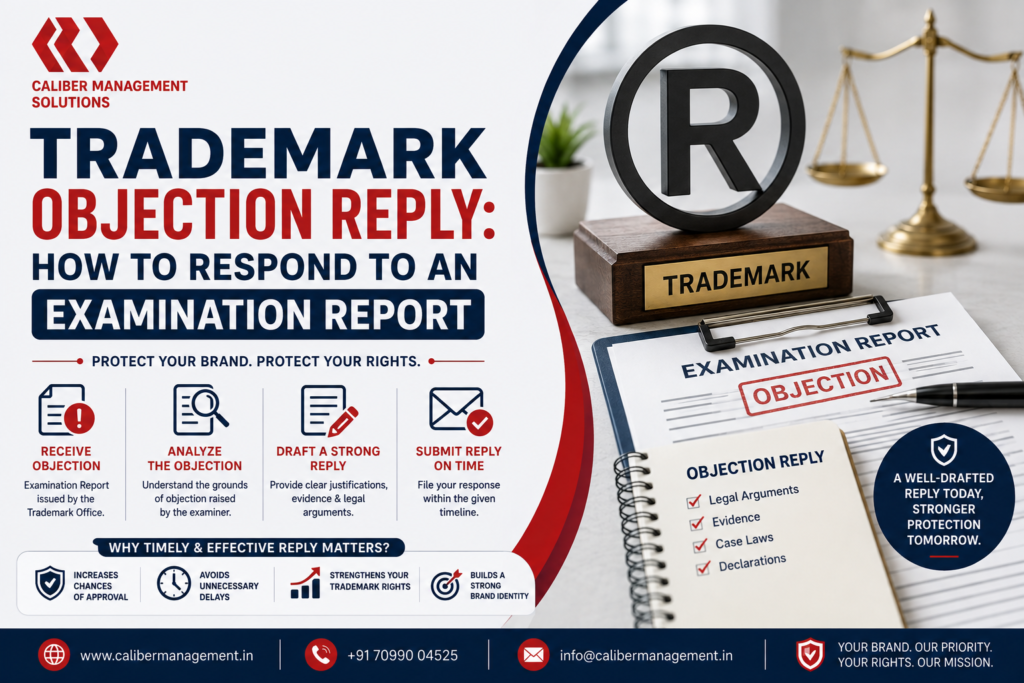
Trademark Objection Reply: How to Respond to an Examination Report
Received a trademark objection and not sure what to do next? Don’t panic — an objection is a normal, common stage in the process, and most are resolvable with a well-drafted trademark objection reply. This guide explains what an examination report is, why objections are raised and exactly how to respond so your application gets back on track.
Key takeaways
- A trademark objection is not a rejection — it’s a chance to defend your mark.
- You typically have 30 days from the examination report to file your reply.
- Most objections fall under Section 9 (descriptive/non-distinctive) or Section 11 (similar to an existing mark).
- A strong, evidence-backed trademark objection reply is what keeps your application alive.
What is a trademark objection?
After you file, a trademark examiner at IP India reviews your application and issues an examination report. If the examiner has concerns, they raise an objection — a formal query you must answer before the application can proceed. It’s a routine step in the trademark registration process, not a final decision. Ignoring it, however, leads to your application being marked abandoned.
Common grounds for a trademark objection
Most objections cite one of two sections of the Trade Marks Act:
Section 9 — absolute grounds The mark is considered descriptive, generic or non-distinctive — for example, calling a bakery “Fresh Bread.” These marks don’t inherently distinguish your goods from others.
Section 11 — relative grounds The mark is identical or similar to an existing registered or pending mark in the same or related class, creating a likelihood of confusion.
Other reasons include incorrect applicant details, wrong trademark class or a vague description of goods/services.
How to write a trademark objection reply: step by step
1. Read the examination report carefully Identify the exact section cited (9, 11, or procedural) and the examiner’s specific reasoning. Your reply must address that reasoning directly.
2. Note the deadline You generally have 30 days from the date of the report to file your reply online. Missing it can lead to abandonment, so act early.
3. Build your argument
- For Section 9 (descriptive): argue your mark is distinctive — show it’s coined, suggestive or has acquired distinctiveness through use. Evidence of use (sales, advertising, duration) strengthens this.
- For Section 11 (similarity): distinguish your mark from the cited mark — differences in spelling, meaning, appearance, goods/services or target market all help.
4. Attach supporting evidence Invoices, marketing material, dates of first use and affidavits can all support your case, especially for acquired-distinctiveness arguments.
5. File the reply online Submit through the Trademark Registry portal within the deadline.
What happens after you reply
- If the examiner is satisfied, your application proceeds to publication in the Trademark Journal.
- If not satisfied, you may be called for a hearing, where you (or your consultant) present your case in person or online.
A clear, well-reasoned trademark objection reply resolves a large share of objections without a hearing.
Why professional help matters for objection replies
A trademark objection reply is a legal document — the strength of your argument and the quality of your evidence directly affect whether your mark survives. A weak or generic reply can doom an otherwise registrable mark, while a well-crafted one saves it. This is why many applicants bring in a consultant specifically at the objection stage.
How to avoid objections in the first place
- Run a thorough trademark search before filing to catch conflicts early
- Choose a distinctive mark — coined or invented words face fewer Section 9 issues
- File in the correct class with a precise description of goods/services
- Get the applicant details right to avoid procedural objections
Getting these right upfront — covered in our trademark registration cost and process guides — dramatically reduces the chance of an objection.
Frequently Asked Questions
What does a trademark objection mean? It means the examiner has raised a query about your application (often under Section 9 or 11). It’s not a rejection — you can reply and defend your mark before it proceeds.
How long do I have to reply to a trademark objection? You generally have 30 days from the date of the examination report to file your reply online. Missing the deadline can lead to your application being abandoned.
Can I reply to a trademark objection myself? Yes, but the reply is a legal argument backed by evidence. A poorly drafted reply can lose an otherwise registrable mark, so many applicants use a professional.
What happens if I don’t reply to the objection? If you don’t respond within the deadline, your application is treated as abandoned and you lose your filing — you’d have to start over.
Facing a trademark objection? We can help
A strong trademark objection reply is the difference between saving and losing your brand. Our trademark registration in Guwahati service includes drafting and filing objection replies and representing you at hearings — book a free consultation to discuss your examination report.