India now enforces mandatory BIS certification for furniture, and every manufacturer, importer and seller needs to understand what that means. Under the Furniture (Quality Control) Order, specified furniture products must carry the ISI Mark before they can be legally made, imported or sold. This guide explains exactly when it applies, the 2026 deadlines, the penalties for non-compliance, who is exempt and how to get compliant quickly.
What does “mandatory” actually mean here?
When the government issues a Quality Control Order (QCO), it makes BIS certification a legal requirement — not a voluntary quality badge. Once the Furniture QCO introduced mandatory BIS certification for furniture, selling a notified product without the ISI Mark became an offence under the BIS Act, 2016. In short: no license, no legal sale.
The order covers six furniture categories, each tied to its own Indian Standard:
- IS 17631:2022 — Work Chairs (Office Chairs)
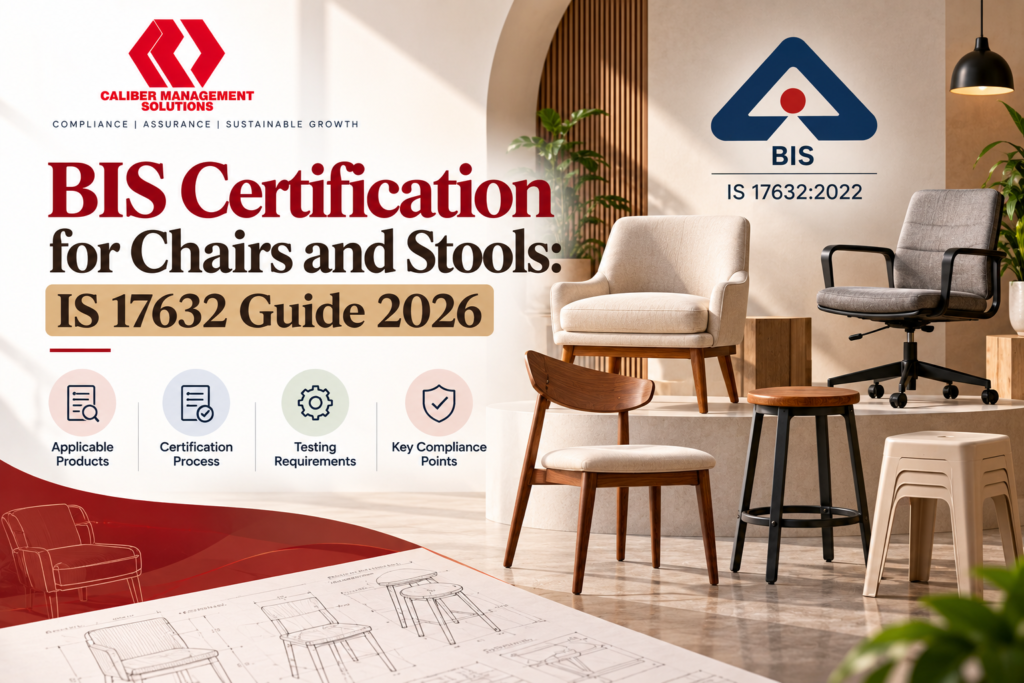
- IS 17632:2022 — General Purpose Chairs & Stools
- IS 17633:2022 — Tables & Desks
- IS 17634:2022 — Storage Units
- IS 17635:2022 — Beds
- IS 17636:2022 — Bunk Beds
If your product falls into any of these, certification is not optional.
Who needs mandatory BIS certification for furniture?
The rule on mandatory BIS certification for furniture applies to:
- Domestic manufacturers — who apply for an ISI Mark license.
- Importers — who can only sell ISI-marked, certified furniture in India.
- Foreign manufacturers — who get certified through the Foreign Manufacturer Certification Scheme (FMCS).
- Sellers and traders — who must stock only certified, marked goods.
If you make, import or sell any of the six notified categories, you are covered.
2026 compliance deadlines
The timeline for mandatory BIS certification for furniture depends on your enterprise size:
- Large enterprises: 14 February 2026
- Micro & small enterprises: 14 August 2026
Because sample testing at a BIS-recognized lab, documentation and factory inspection take several weeks, you should start well before your deadline to avoid a sales freeze.
Penalties for non-compliance
Ignoring mandatory BIS certification for furniture is a serious risk. Under the BIS Act, 2016, penalties include:
- Monetary fines and possible imprisonment for repeat offences
- Seizure of stock by BIS enforcement teams
- Halted sales and blocked shipments
- Removal from procurement — including the GeM (Government e-Marketplace) portal
Beyond the legal exposure, non-compliant brands lose buyer trust and tender eligibility.
Are any businesses exempt?
Yes — two exemptions exist:
- MSME permanent exemption: Micro and small units on the Udyam Portal with audited turnover up to ₹2 crore and plant & machinery investment up to ₹25 lakh are permanently exempt, subject to a Chartered Accountant’s certification.
- Export-only manufacturing: Units whose finished goods are exported entirely outside India (under the Advance Authorization Scheme) may import components without BIS marking, provided no domestic sale occurs and export records are maintained.
Everyone else must comply.
How to comply with mandatory BIS certification for furniture
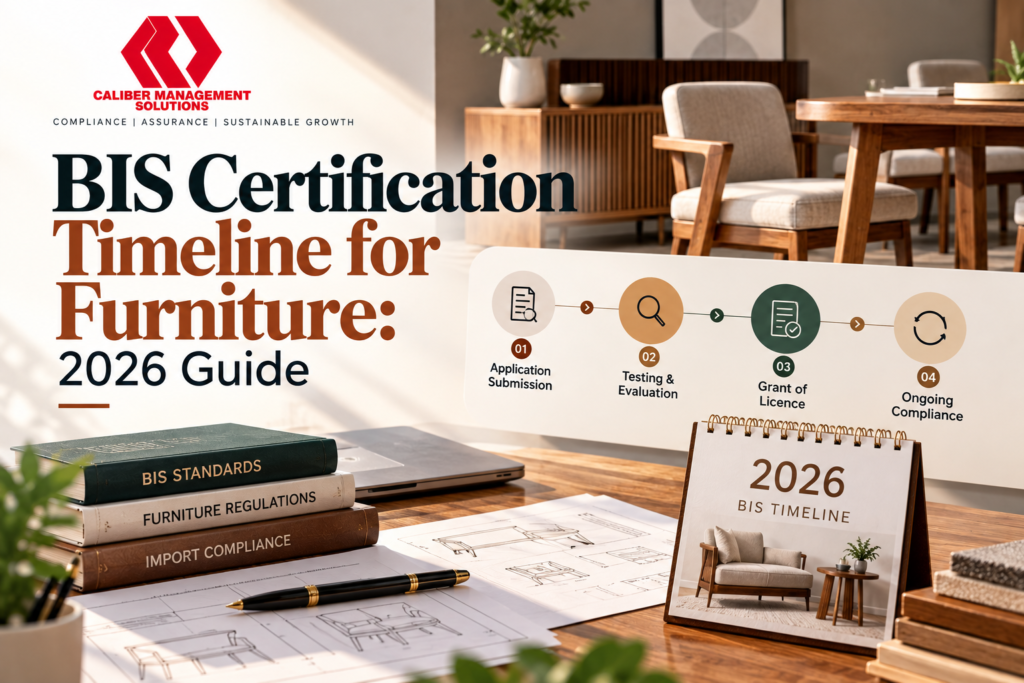
Getting certified follows six clear steps:
- Identify the correct IS standard for your product.
- Prepare technical documentation (registration, GST, factory layout, machinery list, QC procedures).
- Apply on the BIS Manak Online portal.
- Test samples at a BIS-recognized laboratory.
- Pass the factory inspection.
- Receive your CM/L license number and affix the ISI Mark.
For the full walkthrough and category-specific help, see our guide on BIS certification for furniture in Guwahati. You can also read the background in our post on the Furniture QCO 2025.
Frequently Asked Questions
Is mandatory BIS certification for furniture applicable to importers? Yes. Importers can only sell ISI-marked, certified furniture in India, sourced from a certified manufacturer or via FMCS.
What is the penalty for selling furniture without BIS certification? Fines, imprisonment for repeat offences, stock seizure and removal from government procurement under the BIS Act, 2016.
Can MSMEs skip certification? Only micro and small units meeting the Udyam turnover (₹2 crore) and investment (₹25 lakh) limits are permanently exempt, with CA certification.
Facing a 2026 deadline? Caliber Management Solutions is a Guwahati-based consultant that handles mandatory BIS certification for furniture end to end — for manufacturers and importers across Assam and Northeast India. Book a free consultation today.