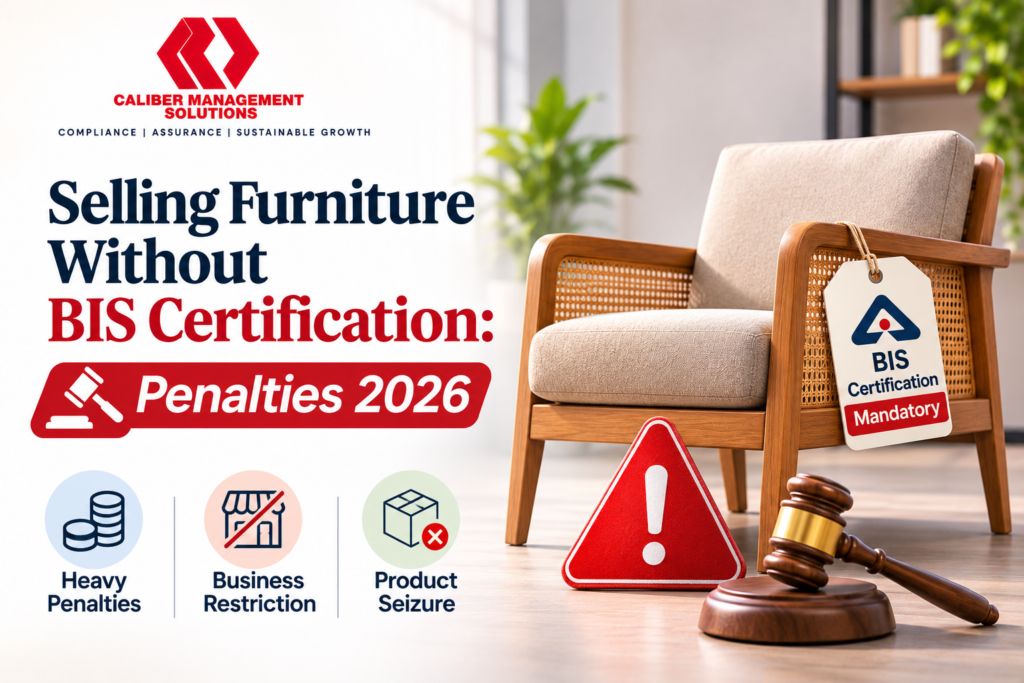
Selling furniture without BIS certification is now an offence in India under the Furniture QCO. Once a product is notified, it cannot be manufactured, stored for sale or sold unless it carries the ISI Mark. This guide explains exactly what happens if you sell non-compliant furniture, the penalties under the BIS Act, 2016 and how to get compliant before enforcement reaches you in 2026.
Is it illegal to sell furniture without BIS certification?
Yes. Under the Furniture (Quality Control) Order, six categories of furniture must carry the ISI Mark. Selling furniture without BIS certification in these notified categories breaches the BIS Act, 2016. The law treats non-certified goods the same whether they are made in India or imported, so manufacturers, importers and sellers all share the risk.
The six notified categories are work chairs (IS 17631), general purpose chairs and stools (IS 17632), tables and desks (IS 17633), storage units (IS 17634), beds (IS 17635) and bunk beds (IS 17636).
Penalties for selling furniture without BIS certification
The consequences of selling furniture without BIS certification are serious and go well beyond a warning:
- Monetary fines that can run into lakhs of rupees for a first offence, with higher amounts for repeat offences.
- Imprisonment of up to two years in certain cases under the BIS Act.
- Seizure and confiscation of non-compliant stock by BIS enforcement teams.
- Improper-use penalties if the ISI Mark is used without a valid license.
These apply per contravention, so a large batch of non-certified furniture multiplies the exposure. For a business holding significant inventory, the combined liability can quickly become severe.
Enforcement is getting stricter
BIS actively runs market surveillance once a product is under a Quality Control Order. Inspectors can visit factories, warehouses and retail points, draw samples and act on non-compliant goods. As the Furniture QCO deadlines pass, enforcement around selling furniture without BIS certification will only intensify, so relying on going unnoticed is a poor strategy. Complaints from competitors or buyers can also trigger an inspection, which means the risk is not limited to random checks.
The business damage beyond fines
The legal penalties are only part of the cost. Selling furniture without BIS certification also means:
- Blocked sales and shipments when consignments are held or rejected.
- Removal from government procurement, including the GeM portal where ISI marking is mandatory.
- Lost buyer trust, since retailers and large buyers increasingly demand certified products.
- Reputational harm if stock is publicly seized or recalled.
For most furniture businesses, the lost contracts and halted sales outweigh the fines themselves. A single blocked tender can cost more than the entire certification would have.
Who faces the biggest risk?
Any business in the supply chain can be penalized, but exposure is highest for high-volume sellers and those supplying institutions. Manufacturers producing notified furniture at scale, importers bringing in large consignments and suppliers bidding for hostel, school or government contracts all deal in the exact products the QCO targets. If your buyers include government bodies or large institutions, compliance is effectively non-negotiable, because those buyers verify certification before placing an order.
How to get compliant and avoid penalties
Avoiding the risk of selling furniture without BIS certification is straightforward once you start:
- Identify the correct IS standard for each product.
- Prepare documentation such as business papers, factory layout, machinery list and quality-control procedures.
- Apply on the BIS Manak Online portal and pay the fees.
- Test samples at a BIS-recognized lab.
- Pass the factory inspection.
- Receive your CM&L license and affix the ISI Mark.
The process usually takes two to four months, so begin well before your deadline. For the full detail see our BIS certification process for furniture, confirm whether BIS certification is mandatory for furniture or get end-to-end help via BIS certification for furniture in Guwahati.
Frequently Asked Questions
Is selling furniture without BIS certification illegal in India?
Yes. Once furniture is notified under the Furniture QCO, selling it without the ISI Mark is an offence under the BIS Act, 2016.
What is the penalty for selling furniture without BIS certification?
Penalties can include fines running into lakhs, possible imprisonment, and seizure of non-compliant stock, with higher amounts for repeat offences.
Can my stock be seized?
Yes. BIS enforcement teams can draw samples and seize non-compliant furniture during market surveillance or raids.
How do I avoid these penalties?
Get your products BIS certified and apply the ISI Mark before selling. Starting early avoids last-minute pressure before a deadline.
Worried about compliance? Caliber Management Solutions helps furniture businesses avoid the penalties of selling furniture without BIS certification — handling documentation, testing and the ISI Mark license for manufacturers and importers across Guwahati, Assam and Northeast India. Book a free consultation today.